Exclusive: Bulgari Chairman on growing a foreign luxury brand in India vs China
By
Shilpa Dhamija Updated 17 Aug, 2026 • Published 3 Aug, 2026
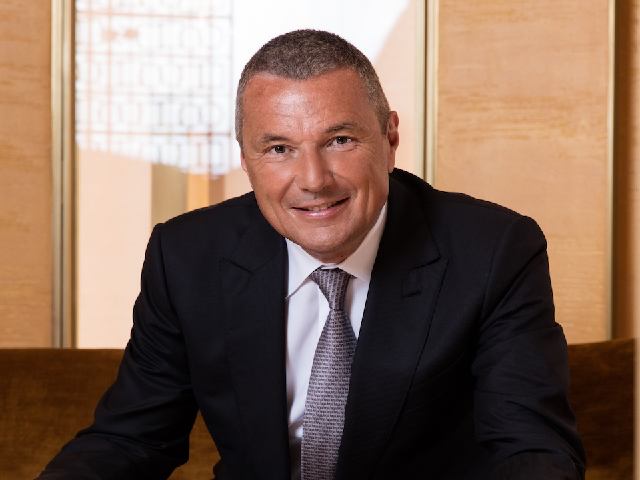
Jean-Christoph Babin recognised India’s luxury market potential long before most of his peers. Over the last 25 years, first as the global CEO of Tag Heuer and then Bulgari, he made a series of strategic moves that laid strong foundations for both brands in India — revealing his nuanced understanding of the region. In an exclusive interview with Luxury Volt, Babin, who is now the Bulgari Board Chairman, explains what it takes to grow a foreign luxury brand in India, and why the market is fundamentally different from China.
In the early 2000s, when Babin became global CEO of TAG Heuer, one of his first major moves was to help establish LVMH Watch & Jewellery India Pvt. Ltd — a dedicated corporate entity, to grow a key division of the world’s largest luxury conglomerate — in a country he believed had high growth potential. Soon after, he expanded Tag Heuer’s network in India to approx. 75 points-of-sale. But while he achieved commercial scale, he also recognised that winning Indian consumers would require more than just good distribution. It would need deep cultural resonance.
How culture shapes luxury consumption in India
Babin noticed how India’s massive film industry shaped aspirations. Recognising its influence, he enrolled one of India’s biggest Bollywood superstars, Shah Rukh Khan (SRK), as Tag Heuer’s first Indian ambassador, Their partnership lasted 13 years. Prior to Tag Heuer, SRK was Omega’s ambassador for less than 5 years.
SRK proved to be one of the brand’s most impactful ambassadors, ever. He wore Tag Heuer watches in several major Bollywood films, giving the Swiss watchmaker strong visibility in the local market. For many SRK fans, that association remains nostalgic even today.
When Babin later took charge of Bulgari as its CEO, his confidence in the Indian market translated into a more substantial commitment. Under his leadership, the maison became one of the very few international luxury houses – to operate in India with 100% foreign direct investment (FDI) – which was rare in the luxury market, at the time.
He also recognised India’s growing ‘global’ influence. In 2021, Bulgari became the first ever iconic, western luxury brand to appoint an Indian superstar – Priyanka Chopra as its global ambassador.
Priyanka Chopra Jonas is Bvlgari’s first ever Indian global ambassador
Following Bulgari, a selection of other marquee luxury brands like Cartier and Gucci enrolled Indian celebrities as global ambassadors, underscoring the subcontinent’s rising influence on the world stage.
“Our partnership with Priyanka goes beyond tapping into her influence”, Babin explains, “We also utilised her knowledge to customise some of Bulgari’s jewellery icons with Indian culture. This helped us create a special bond with Indian clients without compromising our Italian DNA.”
India’s luxury market : On-ground realities
India’s consumers do not judge a luxury brand by its name or fame alone. Their understanding of quality and luxury comes from — generations of exposure to fine craftsmanship — creating deeply developed tastes and expectations. As a result, they tend to judge both Indian and international brands against these cultivated standards.
Indian consumers already possess their own ways of expressing luxury
Babin says this long-standing luxury culture has been very strong and predates the arrival of western brands in India. “Most notably in jewellery and fashion , where prices are comparable to western brands”.
For maisons, which strictly follow their own philosophies of luxury, growing in India can be challenging. “Unless they adapt to Indian tastes.”, Babin points out. Bulgari, under his leadership, produced limited-edition, traditional Indian jewellery for men and women within its iconic collections — that were well received in the market.
The other reality about India is that it has limited infrastructure for luxury retail.
India has only three dedicated luxury malls.
“In India there are few luxury malls because there is a misconception that they cannot be profitable,” he reasons. “Land in developed markets like the US is either comparable or more expensive than India, yet there are so many malls there. In India, however, we don’t have enough.”
While India has cultivated a flourishing domestic luxury industry despite this limitatiom, it remains a setback for overseas luxury brands that require a specific high-end retail environment to deliver their chosen standards of presentation.
Globally, luxury malls are the meeting point of the luxury industry. “Their absence not only slows the expansion of western maisons into India, but probably that of Indian brands too”, he argues. In a country like India, where the climate is hot for much of the year, “malls offer a more comfortable shopping environment than — high streets, which are consequently far less common here.”
Why India’s luxury market is fundamentally different from China’s
Babin explains that India’s luxury market evolved through centuries of uninterrupted cultural continuity “despite British colonialism”. Whereas China’s cultural connection with its past was disrupted for years under the erstwhile regime.
“When China reopened after decades of isolation, its luxury market evolved under the influence of western brands rather than its own heritage brands”, Babin compares. “As China opened its doors to foreign companies, they moved in quickly and found a receptive market.”
Other factors that encouraged western luxury brands to scale in China are – timely growth of luxury infrastructure, and lower taxes and duties “that helped maintain margins”.
In contrast, in India, while the recent reduction in taxes and import duties have brought some relief, Babin feels that the tough FDI rules and limited infrastructure continue to challenge scalability .
How China’s luxury market is localising
While China has shown strong affinity towards western luxury, in recent years there has been a visible shift in preference towards traditional Chinese craftsmanship.
“Chinese consumers are still interested in famous (western) brands,” Babin says. “But the Chinese are proud of their past. and are successfully rediscovering traditional styles and craftsmanship particularly in the jewellery market.”
So the main difference right now between the two markets is that – “China market is seeing duality in consumption, while the Indian market is still essentially covered by Indian brands”, Babin concludes.
1.FDI is Foreign Direct Investment. When a company operates under 100% FDI in India, it means foreign investors own 100% of the equity shares, giving them complete ownership and operational control without requiring a local Indian partner.
Shilpa is a world renowned journalist and an expert in decoding India and Asia’s luxury markets for global readers. Her original, in-depth reports and analysis are frequently featured in prestigious international titles across the UK, China, Hong Kong, Switzerland, and Oman.
Shilpa is a world renowned journalist and an expert in decoding India and Asia’s luxury markets for global readers. Her original, in-depth reports and analysis are frequently featured in prestigious international titles across the UK, China, Hong Kong, Switzerland, and Oman.
India is cutting import duties on many luxury goods; cars, watches, cosmetics & wines through new trade deals with the EU, UK, UAE, Switzerland and Australia. Lower taxes will boost demand of foreign luxury goods in India, encouraging more global brands to enter and expand in the market.
At key global red carpet events, Alia Bhatt has out-ranked icons like Zendaya and Kendall Jenner, while generating multi-million dollar EMV for brands like Gucci & L’Oréal. Discover how the Indian actress strategically built her influence from a teenage movie star to an ROI magnet from south Asia.
India is significantly reducing import duties on alcoholic beverages and liquor – premium wines, whisky, beer, rum, vodka and tequila – as part of new trade deals with the UK, EU, Australia, New Zealand, Switzerland and Finland. See which major alcobev brands and spirits will benefit the most.
His watches are priced at an average $100,000 and yet attract a long waiting list of buyers. Even Chanel has acquired a stake in his company. He has won every major watch industry award in the world. Meet Maximilian Büsser, the Swiss-Indian watchmaker and founder of the unconventional watch brand MB&F