Selling luxury in India gets easier as Import duties reduce
By
Shilpa Dhamija Updated 8 Jun, 2026 • Published 19 Feb, 2026
India is cutting import duties on many luxury goods; cars, watches, cosmetics & wines through new trade deals with the EU, UK, UAE, Switzerland and Australia. Lower taxes will boost demand of foreign luxury goods in India, encouraging more global brands to enter and expand in the market.
One of the most persistent hurdles in the India’s luxury market growth has been steep import duties for foreign luxury goods. However, that is beginning to change. Under a series of new trade agreements, India is eliminating or sharply reducing taxes on luxury imports from several countries – such as France, Italy, and Germany, as well as the UK, Switzerland, the UAE, Oman, and Australia.
India’s luxury market potential
Today, India is home to the world’s fourth largest population of multi-millionaires (with net-worths exceeding $10 million). Its upper-middle-income class is also rising; by 2030, India will have at least 100 million people in the $10,000 income bracket.
Luxury market analysts say India’s current economic growth mirrors China’s from the early 2000s, when rising consumer wealth encouraged a shift towards premiumisation.
To aid the rise in demand for premium products, India is making transformative policy changes that will make it easier for foreign brands to enter and expand in the country.
Luxury cars from Italy, France, Germany and the UK that are taxed up to 110% import duties in India will be gradually slashed to just 10%. Import duties on luxury watches from Switzerland and luxury beauty, cosmetic products from the EU and the UK will be slashed to zero from 22%.
Premium alcoholic beverages, perfumes and many gourmet items from the EU nations and the UK, as well as premium rugs and carpets from the UAE, premium ceramics from Oman, too, will get significant duty reduction.
What are the new taxes on imported luxury cars in India?
India to reduce import duties on CBU luxury cars from EU, UK from 100% to 10%. Pic: Boopesh Reddy, car collector, India
For years, buying fully built luxury cars (CBUs completely built units) from foreign brands like Rolls Royce, Aston Martin, Lamborghini, Ferrari, Maserati, Bugatti, Alfa Romeo, Pagani, McLaren and Bentley was very expensive in India, as import duties were as high as 100% to 110%. Basically, Indian buyers had to pay nearly double the ex-factory price to own these cars in India.
To rationalise high taxes, India has signed FTAs with the UK and the EU, including major luxury car manufacturing hubs such as Italy and Germany. Under these agreements, import duties on luxury cars (CBUs) will fall from 110% to just 10%.
How big is imported luxury car market in India?
Brands like Lamborghini and Porsche have seen steady double-digit growth in India, almost every year since 2019, despite high import duties. Porsche is already expanding into India’s tier-2 cities.
After China, India has the youngest Lamborghini customer base in the world, with an average age below 40. In 2024, the Lamborghini Urus SUV had a waiting list of at least one year.
Despite the high demand for CBU luxury cars India accounts for less than 1% of Lamborghini and Porsche’s global sales, leaving massive room for growth. Lower import duties will unlock this growth potential as luxury cars will become more accessible to Indian buyers. They will also help boost brand margins.
Zero import duties on premium cosmetics in India soon
Luxury segment is the fastest growing segment in India’s beauty market. Pic Armani beauty.
India’s beauty and cosmetics market is set to reach $34 billion by 2028, with the luxury segment forecast to grow the fastest at 14% CAGR
Through its new FTAs, India is set to strengthen trade relations with four of the world’s top 10 cosmetics exporters, the UK, and from the EU – France, Germany, Italy.
Among them, France is the world’s leading exporter of cosmetics with exports valued at €22.5 billion (in 2024).
India is already a key growth market for France’s cosmetic giant L’Oréal. While the company meets domestic demand through local manufacturing, its luxury brands are imported. These include Kérastase, Lancôme, and Armani Beauty. India also imports German luxury beauty brands like Augustinus Bader and Dr. Barbara Sturm. Additionally, perfumes from international luxury brands such as Dior, Armani, Versace, Bvlgari, and Gucci are imported. Duties on these luxury cosmetics and beauty products will fall from 22% to zero over the next 5 to 7 years.
The UK which is the world’s 10th largest exporter of beauty and personal care products is also getting the same import duty rebates from India, benefiting brands such as Charlotte Tilbury and Jo Malone London, who are aggressively expanding in India.
22 % to 0
Import duty reduction on premium cosmetics & perfumes in India
22 % to 0
Import duty reduction in India on luxury watches from Switzerland
Import duties on Swiss watches to be eliminated
In 2024, India signed a trade deal with EFTA – a Euro bloc that includes Switzerland, Iceland, Norway and Liechtenstein.
Under this agreement, India is progressively eliminating import duties on Swiss watches from 22% to zero by 2031. Since the deal took effect in 2025, duties have already fallen to about 15%.
Whisky, beer, wines get big duty reduction in India
India imposes some of the world’s highest taxes on alcoholic beverages – both import duties as well as local taxes.
To reduce the tax burden on the alco-bev industry, India will progressively reduce import duties from 150% to 50%-20%. This will happen under its new trade agreements with the EU, the UK, and Australia.
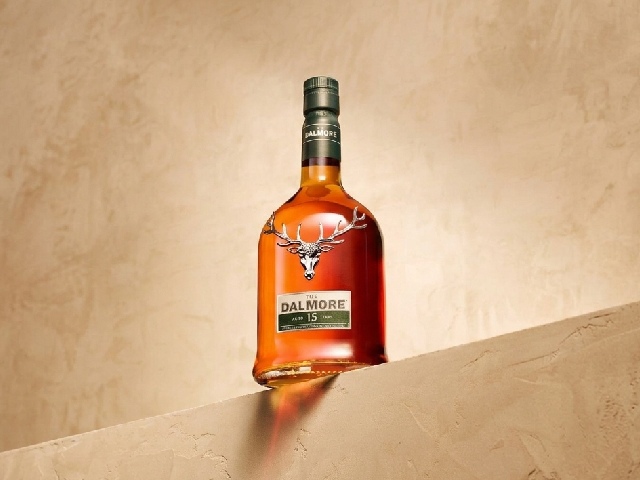
Will imported whisky get cheaper in India? Here’s the full list of tax reductions on premium alcoholic beverages, spirits.
When will import duties on luxury goods drop in India, under the FTAs?
India and the UK signed the FTA in mid-2025 and are likely to implement it in 2026. India and the EU finalised the FTA in early 2026 and are likely to enforce it in 2027. Which means import duties on luxury goods from the UK are likely to start dropping in late 2026. Duties on goods from the EU are likely to fall in late 2027 or early 2028.
India’s EFTA deal with Switzerland, Iceland, Norway and Liechtenstein was signed in March 2024. The deal, ratified by the EFTA nations, came into effect in the autumn of 2025. Since then, taxes on luxury goods from these countries have already seen some reductions.
India’s signed and implemented the trade deal with the UAE in 2022, and with Oman in 2025. India’s agreement with Australia was signed and implemented in 2022. It has already reduced duties on some of its luxury goods.
1.Alcoholic beverages include all ethanol drinks, while spirits are a distilled subset with higher ABV (typically 35–50%), 2.14% CAGR (2023-2028) Kearney report.
FAQs
Which foreign beauty brands benefit from import duty reductions in India? +
Cosmetics from the UK, France, Germany and Italy will see import duty reductions in India. Duties will gradually reduce from 22% to 0 starting 2026-27. This is applicable to all premium and luxury cosmetics.
Brands such as Chanel, Dior, Guerlain, Yves Saint Laurent, Lancôme, Clarins, Charlotte Tilbury, Kiko Milano, Gucci Beauty, Embryolisse, Caudalie, Mugler, Avène, La Roche-Posay, Bioderma, Eucerin, and Augustinus Bader will become more accessible in India. Also Jo Malone London, Diptyque, Maison Francis Kurkdjian, Penhaligon’s, Acqua di Parma, Kérastase, L’Oréal Professionnel, and Schwarzkopf Professional, Armani beauty are likely to get cheaper.
How does India benefit from these FTAs and economic partnerships? +
India’s trade agreements with the UK and EU are reciprocal FTAs (Free Trade Agreements). These agreements establish a mutually beneficial framework where India grants duty cuts on European imports – in exchange for receiving similar duty cuts on Indian exports.
Whereas, India’s trade agreements with the EFTA nations (Iceland, Liechtenstein, Norway, and Switzerland), and with UAE, Oman and Australia are not exactly FTAs, they are strategic economic agreements, which go beyond tariff cuts to promote investment and regulatory cooperation. For example, in the EFTA deal, while India reduces import tariffs on EFTA goods, in return, India will get a total of $100 billion investment from the EFTA nations over 15 years.
Shilpa is a world renowned journalist and an expert in decoding India and Asia’s luxury markets for global readers. Her original, in-depth reports and analysis are frequently featured in prestigious international titles across the UK, China, Hong Kong, Switzerland, and Oman.
Shilpa is a world renowned journalist and an expert in decoding India and Asia’s luxury markets for global readers. Her original, in-depth reports and analysis are frequently featured in prestigious international titles across the UK, China, Hong Kong, Switzerland, and Oman.
India is cutting import duties on many luxury goods; cars, watches, cosmetics & wines through new trade deals with the EU, UK, UAE, Switzerland and Australia. Lower taxes will boost demand of foreign luxury goods in India, encouraging more global brands to enter and expand in the market.
At key global red carpet events, Alia Bhatt has out-ranked icons like Zendaya and Kendall Jenner, while generating multi-million dollar EMV for brands like Gucci & L’Oréal. Discover how the Indian actress strategically built her influence from a teenage movie star to an ROI magnet from south Asia.
India is significantly reducing import duties on alcoholic beverages and liquor – premium wines, whisky, beer, rum, vodka and tequila – as part of new trade deals with the UK, EU, Australia, New Zealand, Switzerland and Finland. See which major alcobev brands and spirits will benefit the most.
His watches are priced at an average $100,000 and yet attract a long waiting list of buyers. Even Chanel has acquired a stake in his company. He has won every major watch industry award in the world. Meet Maximilian Büsser, the Swiss-Indian watchmaker and founder of the unconventional watch brand MB&F
Reliance Brands Limited (RBL) is the premium and luxury retail powerhouse of the Reliance Industries conglomerate. It is the India partner for global brands such as Balenciaga, Bottega Veneta, Burberry, Giorgio Armani, Tiffany & Co., Valentino, and Versace. It also holds significant stakes in leading Indian designers like Manish Malhotra and Abu Jani Sandeep Khosla.
Isha Ambani is the Executive Director of Reliance Retail Ventures Limited (RRVL), which is the parent company that owns and oversees RBL.
Aditya Birla Fashion Retail Ltd. (ABFRL) is India’s single largest fashion conglomerate with a turnover of $860.50 million (₹7,354.73 crore). ABFRL is the India partner of Galeries Lafayette and Christian Louboutin. It is also the majority stake owner of India’s most valuable luxury brand – Sabyasachi. Other Indian luxury and premium fashion brands in its portfolio include – Tarun Tahiliani. Shantnu & Nikhil, Masaba and Jaypore.
ABFRL is the fashion retail arm of Aditya Birla Group that recorded a consolidated revenue exceeding US$67 billion (approximately ₹5.6 lakh crore) in FY’25.
DLF (Delhi Land and Finance) is India’s leading luxury retail developer. It launched India’s first luxury-mall in New Delhi in 2008. In 2017, DLF launched another luxury mall – The Chanakya in New Delhi city centre. Together, these destinations host a definitive lineup of global and domestic fashion houses including Hermes, Louis Vuitton, Bvlgari, Gucci, Cartier, Bottega Veneta, Salvatore Ferragamo, Fendi, Tom Ford, and Jimmy Choo, alongside premier Indian couturiers like Tarun Tahiliani and Gaurav Gupta.
DLF is also India’s premier developer in the luxury real estate sector, renowned for creating ultra-luxury residential projects like The Camellias and The Aralias, that have the most expensive homes in the entire national capital region