Premium alcohol market to grow in India as import duties reduce
By
Amit Singh Updated 8 Jun, 2026 • Published 27 Apr, 2026
India is significantly reducing import duties on alcoholic beverages and liquor – premium wines, whisky, beer, rum, vodka and tequila – as part of new trade deals with the UK, EU, Australia, New Zealand, Switzerland and Finland. See which major alcobev brands and spirits will benefit the most.
Indian import duties on premium alcohol are set to drop by about 75%, thanks to new trade deals signed by India with several European nations, as well as Australia and New Zealand.
India levies some of the highest taxes on alcoholic beverages and spirits. The total tax on some alcoholic beverages is as high as 400%.
How does India tax alcobev?
Let’s first break down how India taxes alcoholic beverages and spirits. India levies two types of major taxes on alcohol – Import duties (if the alco-bev is imported) and VAT (domestic taxes, applicable on all alcobevs – domestic and imported).
Import duties
In India, import duties on alcobev can go as high as 150%.
VAT
On top of import duties, India imposes local tax, called VAT. India does not have a uniform national tax for alcobevs. Instead, each state in India has its own tax structure for alcobevs. The local tax can vary from 20% to 250%. Because every state chooses its own VAT rate, the retail price for the same bottle can vary from one state to another. As a result, in India, in some states, the total tax (Import duties + VAT) on imported alcoholic beverages can be as high as 400% (150%+250%)
While India is not changing its VAT structure for alcoholic beverages, it is bringing some relief to the sector by reducing import duties.
How will India reduce import duties on premium alcobev?
India is progressively reducing its import duties from 150% down to 20%-50% for several beverages under its new trade agreements with the EU, the UK as well as Australia and New Zealand. The import taxes will be reduced in two stages. The first major cut will come as soon as the FTAs are implemented. Second set of cuts will be applied in a phase-wsie manner.
India-EU FTA: As soon as the FTA comes into force, which is expected to be in 2026-27 – duties on premium wine, spirits, and beer from EU nations will immediately drop from 150% to 75%.
Thereafter, the second phase of duty cuts will start. India will further reduce duties from 75% to a final 20% on wine and 40–50% on spirits and beer by 2036, making premium alcohol labels from EU nations like France, Italy, and Germany much more affordable.
Alcoholic beverages and spirits from France’s Pernod Ricard, Moet Hennessy, Bordeaux. As well as popular Beers like Heineken from Netherlands, Hoegaarden from Belgium, other alcobevs such as Campari from Italy – will see their import duties reduce from 150% to 50%-20% in India by 2036.
Full timeline of import duty reduction for all countries
India-UK FTA: This pact targets a gradual reduction for British favourites. Bottled beer will see its duty nullify entirely (0%) by 2026. Other spirits like Scotch whisky, gin, and liqueurs will drop to 75% in the first phase and settle at 40% by 2036.
India-Australia ECTA: Already in motion since 2022, this deal benefits premium wines (priced over $15) from Australia. Import duties have already dropped to 75% and will gradually decline to 25% by 2032, giving Australian luxury winemakers a head start in the Indian market.
India-EFTA: This agreement (involving nations like Switzerland and Norway) began its cycle in 2025. Premium wines will see their duties cut to 25% by 2035.
India-New-Zealand: Wine is the only major alcoholic beverage imported by India from New Zealand. The India-NZ trade agreement signed in April 2026 will reduce import duties on New Zealand wines from 150% to 50%.
Overall consumer benefit: Across all India trade agreements – the immediate reduction to 75% (down from 110-150%) significantly lowers the entry price for international premium and luxury brands, fostering a more competitive and diverse luxury beverage market in India.
Here’s a complete timetable of how India’s new trade agreements will benefit premium, prestige and luxury alcoholic beverages and spirits.
Timeline: How will India reduce import duties on alcoholic beverages?
How big is India’s premium alcoholic beverages market?
India’s alcobev market is valued at $48-$50 billion, as per various industry estimates. India is already the world’s fifth-largest alcoholic beverages (alco-bev) market by volume. Moreover, it has great potential to expand. About 23 million Indians enter the legal drinking age, every year. Additionally, a steady consumer shift toward premiumisation is driving demand for high-end alcoholic beverages.
No.1 in Whisky
India is world's biggest WHISKY market by volume.
No.5 in all alcobevs
India is world's fifth largest ALCOHOLIC BEVERAGES market by volume
Whiskey is India’s most popular alcoholic drink. It holds a 65% share of the total alcobev market in India. In fact, volume-wise, India is the biggest whisky consumer in the world.
As India reduces import duties on whisky from EU and the UK under the new trade deals, many new premium whiskey brands are likely to debut in India.
For France’s Pernod Ricard’s whisky division, India is already the second largest global market, by volume.
Beer is India’s second largest alcobev segment, valued at about $5.2 billion in 2024. Under the EU deal, India will reduce beer import duties from 150% to just 50%.
For Danish beer brand Carlsberg, India is a bigger market than China.
The wine market is relatively small in India. It accounts for less than 1% of India’s alcobev market leaving plenty of room to grow. Notably, Australia, and not the EU, is the biggest exporter of wine to India. Under the India-Australia trade agreement, signed in 2022, import duties on Australian wines have already dropped from 150% to 75%. India will gradually reduce these rates even further to 25%.
1.Alcoholic beverages include all ethanol drinks, while spirits are a distilled subset with higher ABV (typically 35–50%), 2. 2025 figure
FAQs
Which luxury alcoholic beverage brands will benefit from low import duties in India? +
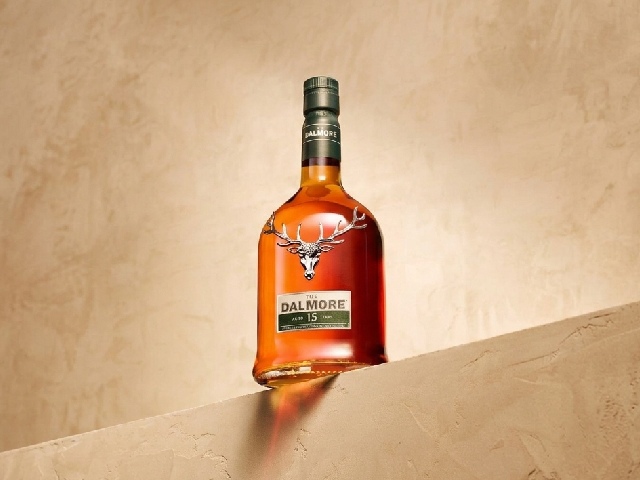
From the United Kingdom and Europe, several popular alcobevs will see their import duties reduce from 150% to 50%-20% in India. Prestige scotch whiskies include Johnnie Walker, The Macallan, Glenfiddich, The Glenlivet, The Balvenie, Talisker, Lagavulin, Laphroaig, Chivas Regal, Royal Salute, Ballantine’s, The Singleton, Aberlour, Ardbeg, Bowmore, Dalmore, Glenmorangie, and Dewar’s. French luxury alcoholic beverages; cognacs such as Hennessy, Rémy Martin, Martell, and Louis XIII, as well as high-end vodkas like Grey Goose and Cîroc. Elite champagnes include Dom Pérignon, Veuve Clicquot, Krug, Moët & Chandon. Other notable spirits include the Netherlands’ Ketel One vodka, Italy’s Campari and Aperol, and Germany’s Jägermeister.
Australian wine brands that qualify for phased duty reductions under the trade agreement with India include Penfolds, Torbreck Vintners, Henschke, Two Hands, d’Arenberg, Wirra Wirra, Tyrrell’s, Yalumba, Peter Lehmann, Wolf Blass, Jacob’s Creek, Leeuwin Estate, Vasse Felix, Clarendon Hills, and De Bortoli.
Which other luxury items will get tax cuts under India's FTAs? +
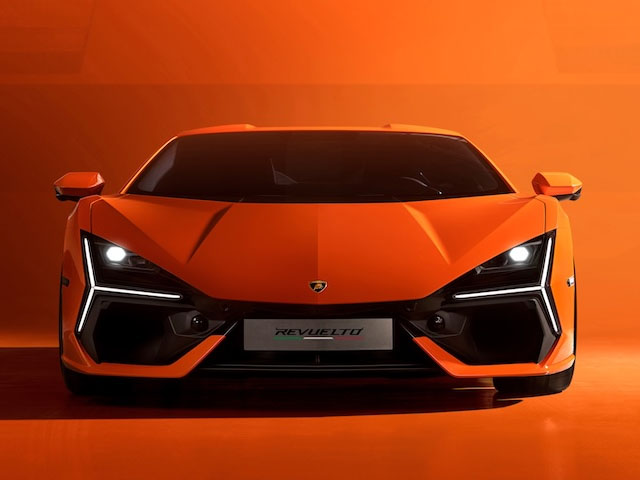
Luxury goods other than premium alcoholic beverages getting major import duty or tax cuts in India under its new trade agreements are cars, watches, cosmetics and chocolates.
How does India benefit from FTAs and economic partnerships? +
India’s trade agreements with the UK and EU are reciprocal FTAs (Free Trade Agreements). These agreements establish a mutually beneficial framework where India grants duty cuts on European imports – in exchange for receiving similar duty cuts on Indian exports.
Whereas, India’s trade agreements with the EFTA nations (Iceland, Liechtenstein, Norway, and Switzerland), and with UAE, Oman and Australia are not exactly FTAs, they are strategic economic agreements, which go beyond tariff cuts to promote investment and regulatory cooperation. For example, in the EFTA deal, while India reduces import tariffs on EFTA goods, in return, India will get a total of $100 billion investment from the EFTA nations over 15 years.
Amit specialises in data analytics, consumer trends & India luxury market strategies for global brands. Amit is a Gen-Z writer. He previously worked at Reuters & MSN.
Amit specialises in data analytics, consumer trends & India luxury market strategies for global brands. Amit is a Gen-Z writer. He previously worked at Reuters & MSN.
India is cutting import duties on many luxury goods; cars, watches, cosmetics & wines through new trade deals with the EU, UK, UAE, Switzerland and Australia. Lower taxes will boost demand of foreign luxury goods in India, encouraging more global brands to enter and expand in the market.
At key global red carpet events, Alia Bhatt has out-ranked icons like Zendaya and Kendall Jenner, while generating multi-million dollar EMV for brands like Gucci & L’Oréal. Discover how the Indian actress strategically built her influence from a teenage movie star to an ROI magnet from south Asia.
India is significantly reducing import duties on alcoholic beverages and liquor – premium wines, whisky, beer, rum, vodka and tequila – as part of new trade deals with the UK, EU, Australia, New Zealand, Switzerland and Finland. See which major alcobev brands and spirits will benefit the most.
His watches are priced at an average $100,000 and yet attract a long waiting list of buyers. Even Chanel has acquired a stake in his company. He has won every major watch industry award in the world. Meet Maximilian Büsser, the Swiss-Indian watchmaker and founder of the unconventional watch brand MB&F
Reliance Brands Limited (RBL) is the premium and luxury retail powerhouse of the Reliance Industries conglomerate. It is the India partner for global brands such as Balenciaga, Bottega Veneta, Burberry, Giorgio Armani, Tiffany & Co., Valentino, and Versace. It also holds significant stakes in leading Indian designers like Manish Malhotra and Abu Jani Sandeep Khosla.
Isha Ambani is the Executive Director of Reliance Retail Ventures Limited (RRVL), which is the parent company that owns and oversees RBL.
Rashmika Mandanna is a popular South-Indian film actress. She has over 52 million followers on Instagram and has a pan-India, multilingual fan-base. She starred in one of India’s all-time most profitable films – ‘Pushpa The Rise’. Rashmika is the India-market ambassador for Swarovski, Onitsuka Tiger, and Airbnb. She is married to south-Indian film superstar Vijay Deverakonda.
Aditya Birla Fashion Retail Ltd. (ABFRL) is India’s single largest fashion conglomerate with a turnover of $860.50 million (₹7,354.73 crore). ABFRL is the India partner of Galeries Lafayette and Christian Louboutin. It is also the majority stake owner of India’s most valuable luxury brand – Sabyasachi. Other Indian luxury and premium fashion brands in its portfolio include – Tarun Tahiliani. Shantnu & Nikhil, Masaba and Jaypore.
ABFRL is the fashion retail arm of Aditya Birla Group that recorded a consolidated revenue exceeding US$67 billion (approximately ₹5.6 lakh crore) in FY’25.